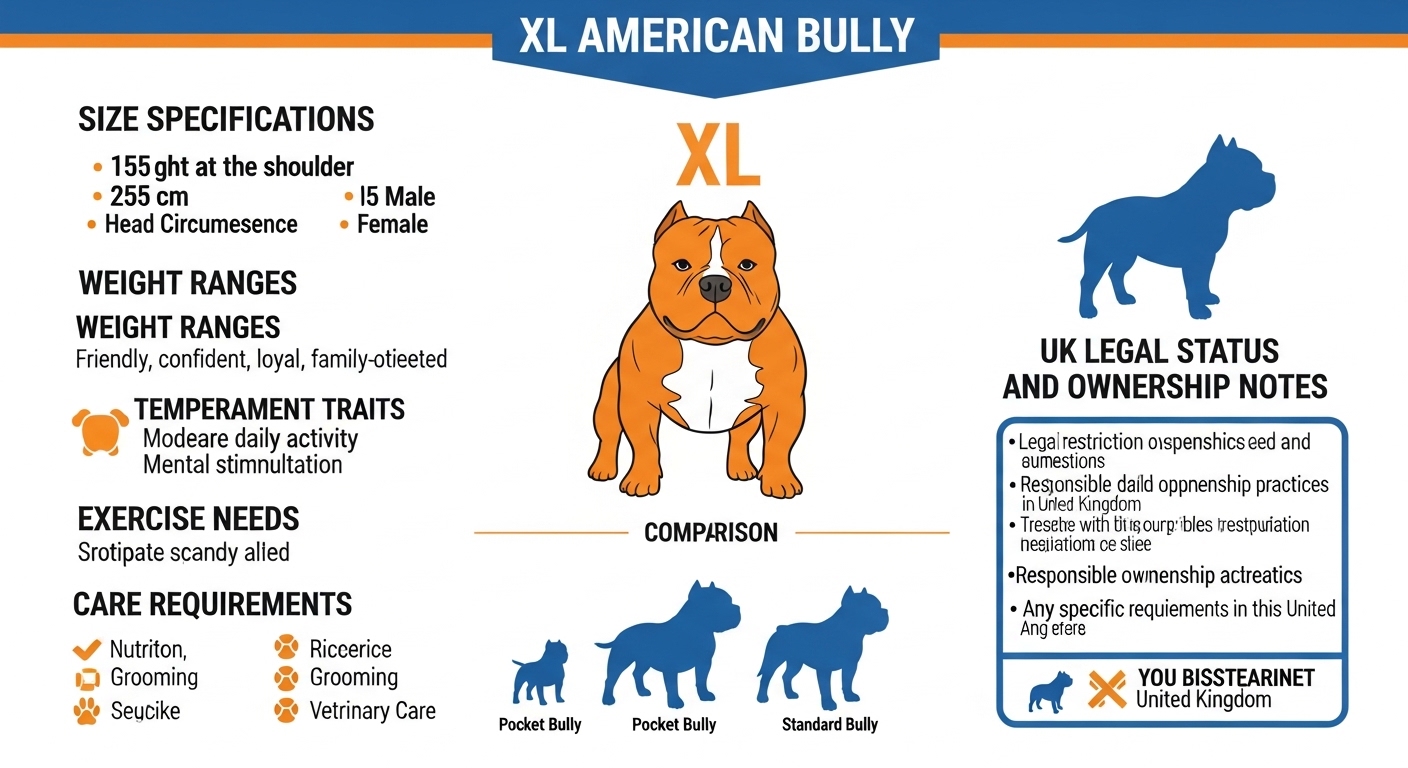
- Size & Scale: XL Bullies stand 20 to 23 inches at the shoulder (males) and usually weigh between 80 to 150+ lbs. They represent the largest class within the American Bully breed.
- Temperament: Despite a scary appearance, a well-bred XL is stable, gentle, and deeply bonded to its family. Aggression toward humans is actually a disqualifying fault in the breed standard.
- Legal Status: Ownership rules are all over the place. They are fully legal in most of the US but heavily restricted under the Dangerous Dogs Act in the UK (where owners must have a Certificate of Exemption).
- Health: Joint health is the big worry. Hip and elbow dysplasia are common issues because of their heavy build.
Ten years ago, the XL American Bully was a niche breed known only to a small circle of enthusiasts. Today, they are one of the most recognized and debated dogs on the planet. This shift brings a lot of responsibility for current and future owners. You need hard facts rather than rumors. This xl american bully complete guide breaks down everything from the 2026 legal requirements to feeding a 120-pound athlete.
What Exactly Is an XL American Bully?
The American Bully is its own distinct breed. It’s not a Pitbull. The American Bully Kennel Club (ABKC) recognizes four sizes: Pocket, Standard, Classic, and XL. The XL is simply the tallest and heaviest variation of the bunch.
Breeders developed the American Bully by mixing American Staffordshire Terriers and American Pit Bull Terriers with other bulldog breeds. The goal was specific: remove the dog aggression found in terriers while keeping the impressive physique. The result is a companion dog with a heavy bone structure and a signature “blocky” head.
The XL category faces the most scrutiny because of its raw power. A true XL must still look like an American Bully. It shouldn’t look like a Mastiff or a tall terrier. It needs muscle definition, a broad chest, and a confident stance.
XL American Bully Complete Guide to Size and Growth
Size is the main selling point for this class. But here is the catch: height determines the class, not weight. A dog can weigh 150 lbs, but if it’s short, it might not be an XL.
The ABKC defines the XL class strictly by height at the withers (shoulder blades).
American Bully Size Comparison Table
| Class | Male Height | Female Height | Typical Weight |
|---|---|---|---|
| 14″ – 17″ | 13″ – 16″ | 30 – 50 lbs | |
| Standard | 17″ – 20″ | 16″ – 19″ | 50 – 80 lbs |
| Classic | 17″ – 20″ | 16″ – 19″ | 50 – 80 lbs (Lighter frame) |
| XL | 20″ – 23″ | 19″ – 22″ | 80 – 150+ lbs |
Note on Growth:
XL Bullies are slow growers. They reach their full height around 12 to 18 months, but they aren’t done yet. They continue to “fill out” and gain muscle width until they are three years old. Don’t rush this process with overfeeding. Rapid weight gain will damage their joints.
Temperament: Fact vs. Fiction
News outlets often portray the XL Bully as dangerous. The breed standard describes them as gentle and friendly. The truth usually comes down to breeding and raising.
A well-bred XL Bully acts like a heavy lap dog. They bond tightly with their human pack. They generally tolerate pain well, which makes them patient with children. However, their size makes supervision mandatory. A clumsy 120-pound dog can accidentally knock over a toddler without meaning any harm.
Aggression isn’t a breed trait. The ABKC standard explicitly penalizes aggression towards humans. These dogs shouldn’t be used for guarding property in a way that encourages biting. Their physical presence is usually enough to scare off intruders.
Dog Aggression
You might see aggression toward other dogs in some XL Bullies. This is a remnant of their terrier ancestors. Early socialization helps reduce this risk significantly. You must introduce your puppy to different dogs, noises, and people before they turn 16 weeks old.
Legal Status: US vs. UK (2026 Update)
You can’t own this breed without understanding the law. Regulations shifted hard in the mid-2020s.
United States
In the US, the XL Bully is generally legal. However, specific insurance companies may blacklist the breed. Some landlords also ban “bully breeds” regardless of the specific DNA test results.
You might face restrictions in cities with Breed Specific Legislation (BSL). These laws often lump American Bullies in with Pitbulls. Always check your local municipal code before bringing a puppy home.
United Kingdom (The Ban)
The UK government added the XL Bully to the Dangerous Dogs Act. If you live in England, Wales, or Scotland, strict rules apply.
Requirements for UK Owners:
1. Exemption Certificate: You must have a valid Certificate of Exemption.
2. Neutering: The dog must be neutered.
3. Leash and Muzzle: The dog must be muzzled and on a lead at all times in public. No exceptions.
4. Insurance: You must hold third-party liability insurance.
5. Microchip: The dog must be microchipped and registered.
Breeding, selling, or giving away an XL Bully is illegal in the UK. If you have an XL Bully without a certificate, the police can seize and destroy the dog.
Diet and Nutrition for Massive Muscle
Feeding an XL Bully costs money. They require high-quality fuel to maintain muscle mass without becoming obese.
Protein is King
Look for kibble or raw food where the first ingredient is a named meat (Chicken, Beef, Turkey). Avoid “meat meal” or corn-based fillers. Adult males often eat 4 to 6 cups of high-quality kibble daily.
The Joint Support Factor
Because these dogs carry heavy weight on their frames, supplements help a lot. Add these to their diet:
* Glucosamine and Chondroitin: Helps maintain cartilage.
* Omega-3 Fatty Acids (Fish Oil): Reduces inflammation and helps skin health.
Feeding Puppies
Don’t feed puppy food designed for small breeds. Use a formula specifically made for “Large Breed Puppies.” These formulas have lower calcium and phosphorus levels to control bone growth speed. Growing too fast causes structural defects like cow-hocks or east-west paws.
Exercise and Training
Leaving an XL Bully in the backyard isn’t an option. They crave interaction.
Activity Levels
They are bursts-of-energy dogs. They don’t need to run 5 miles a day like a Husky. They need 30 to 45 minutes of moderate activity. Walking is excellent. Flirt poles (a toy on a stick) work well for burning energy quickly.
Warning: Avoid high-impact jumping or forced running on pavement until the dog is at least 18 months old. Their joints are still forming. Heavy impact causes permanent damage.
Training Essentials
Training must start immediately. You won’t be able to physically overpower a fully grown XL Bully. They must listen to verbal commands.
- Leash Manners: This is priority number one. A pulling XL Bully is a safety hazard. Use a harness for puppies, but transition to heel training quickly.
- Socialization: Take them to hardware stores, parks, and busy streets. They need to see the world as boring and normal.
- Muzzle Training: Even in the US, muzzle training is smart. It protects your dog and the public. In the UK, it’s the law. Make the muzzle a positive thing by pairing it with treats.
Common Health Problems
The XL American Bully suffers from issues common to large breeds and bulldog types.
Hip and Elbow Dysplasia
This is the most frequent issue. The ball and socket of the joint don’t fit together correctly. This causes pain and arthritis. Ask breeders for OFA (Orthopedic Foundation for Animals) or PennHIP scores on the parents. If the breeder doesn’t test the parents, walk away.
Heart Disease
Subaortic Stenosis and other heart defects occur in the breed. Regular vet checkups should include listening to the heart for murmurs.
Skin Conditions
Their short coat offers little protection. They are prone to allergies (environmental and food) and mange. If you see bald spots or constant scratching, check their diet or shampoo.
Heat Intolerance
They aren’t as flat-faced as English Bulldogs, but they still struggle in heat. Their muscle mass generates a lot of body heat. Keep them cool in summer. They can overheat and die quickly if left in the sun.
Grooming and Maintenance
Here is the easy part. The XL Bully has a short, smooth coat.
- Brushing: Once a week with a rubber curry brush removes dead hair.
- Bathing: Once a month or when dirty. Don’t over-bathe, or you’ll dry out their skin.
- Nail Trimming: You must keep nails short. Long nails force the toes to spread, which puts stress on the joints.
- Ear Cleaning: Check ears weekly. Yeast infections are common in floppy ears.
Cost of Ownership breakdown
Buying the dog is just the entry fee. The lifetime cost is substantial.
- Puppy Price: A quality XL Bully from health-tested parents costs between $2,500 and $5,000 in the US. “Rare” colors like Merle or Lilac often cost more, though color doesn’t equal quality.
- Food: Expect to spend $100 to $150 per month on quality food.
- Vet Bills: Everything costs more for big dogs. Anesthesia, antibiotics, and flea prevention are priced by weight.
- Insurance: Rates for this breed are high. Expect to pay $60 to $100+ per month depending on your location and coverage.
Finding a Reputable Breeder
The popularity of the XL Bully attracted many “backyard breeders.” These people breed for money, not health.
Red Flags:
* They can’t show you health tests for hips and hearts.
* They sell puppies before 8 weeks old.
* They charge extra for “rare” colors.
* They breed dogs with extreme deformities (extremely bowed legs or smashed faces).
Green Flags:
* They focus on structure and temperament.
* They ask you questions about your lifestyle.
* They offer a health guarantee.
* They register dogs with the ABKC.
The XL American Bully is a capable, loving, and impressive animal. They require a confident owner who respects their size and strength. If you can provide the training, the food, and the leadership, they are among the best family companions in the world.
Ready to Buy Your Bully?
Get the complete buyer's guide. Every class explained, every scam exposed, every health check covered.
Get the Guide – $17