Mike walked through his front door after a long shift. He expected a wagging tail. Instead, he found his drywall ripped apart and his new sofa reduced to a pile of stuffing. He looked at his bank app, saw the pending transaction for next month’s high-risk homeowner’s insurance, and realized he had made a miscalculation. This is the reality many owners face when they buy a dog based on looks rather than lifestyle fit. You might love the muscular build and the blocky head, but you need to examine the 3 reasons you should not get an american bully before you commit to the next ten years.
If you want the short version, here is why this breed might ruin your plans:
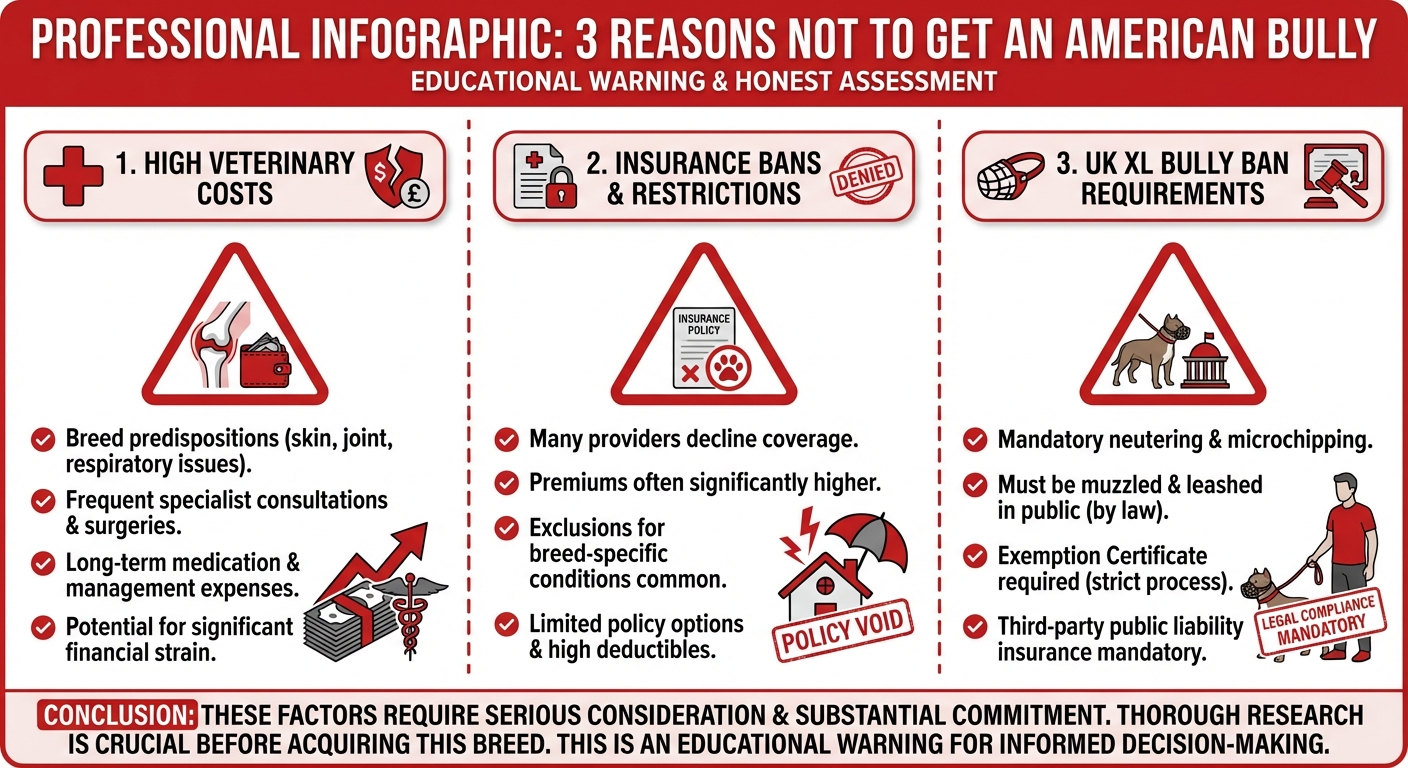
Medical Bankruptcy: Genetic disasters like hip dysplasia and skin allergies are common. You will spend thousands at the vet.
Housing & Insurance Nightmares: Most landlords ban them. Insurance companies often drop coverage or charge premiums 3x higher than average.
Extreme Clinginess: These aren’t independent dogs. They suffer severe separation anxiety and will destroy your home if left alone for long periods.
3 Reasons You Should Not Get an American Bully
The American Bully is a modern breed created by mixing American Pit Bull Terriers with American Staffordshire Terriers and various Bulldog breeds. Breeders wanted a companion dog with a tough look but a gentle temperament. While they often achieved the temperament, the physical and social costs of owning one are immense.
Here are the primary factors that make this breed a poor choice for the average household.
1. The Health Crisis (and the Bills that Follow)
The American Bully is a result of heavy selective breeding to achieve a specific “look.” Breeders prioritized wide chests, massive heads, and short legs. This extreme anatomy comes with a heavy price tag.
Joint and Skeletal Issues
Because these dogs carry massive weight on often short, bowed legs, their joints fail early. Hip dysplasia and elbow dysplasia are rampant in the breed. In 2026, a total hip replacement costs between $7,000 and $10,000 per hip. You might buy a puppy for $3,000, but you could easily spend $20,000 on surgeries before the dog turns five.
The “Pocket” Problem
The “Pocket” variation is arguably the unhealthiest. These dogs have the heavy upper body of a standard bully but the short legs of a bulldog. This structure puts excruciating pressure on their joints. They often can’t run or play like normal dogs without risking injury.
Skin and Respiratory Conditions
Bully breeds suffer from atopic dermatitis (severe skin allergies). They react to grass, grain, chicken, and dust. This means constant itching, hot spots, and infections. You’ll likely pay for monthly Cytopoint injections or daily Apoquel pills for the dog’s entire life. Additionally, the shorter the snout (brachycephalic traits), the harder it is for them to breathe. They overheat quickly in summer and can’t handle vigorous exercise.
Estimated Annual Medical Costs (2026)
| Condition | Treatment / Management | Est. Annual Cost |
|---|---|---|
| Skin Allergies | Meds (Apoquel/Cytopoint), Special Shampoo | $1,200 – $1,800 |
| Joint Pain | Supplements, NSAIDs, Physical Therapy | $800 – $2,500 |
| Heart Issues | Echocardiograms, Medication | $1,000 – $3,000 |
| Special Diet | Prescription Hypoallergenic Food | $1,500 – $2,000 |
| Total Extra | (On top of standard care) | $4,500+ |
2. The Insurance and Housing Blacklist
You might own the sweetest dog in the world, but the rest of society sees a liability. This is the most practical of the 3 reasons you should not get an american bully. The world isn’t built to accommodate them.
The Rental Market Blockade
If you rent your home, getting an American Bully is nearly impossible. Most property management companies work off a “banned breed” list. This list almost always includes “Pit Bull type dogs,” which covers the American Bully. Even if you argue that it’s a different breed, landlords rarely care about the distinction. They see the blocky head and deny the application.
Homeowner’s Insurance Drops
If you own your home, check your policy. Many major insurers (like Allstate, Farmers, or Nationwide) may deny coverage or exclude dog bites from liability claims if you own a “bully breed.” You may have to seek out high-risk insurance policies; these can cost double or triple the standard rate.
The UK Context: XL Bully Ban
For readers in the United Kingdom or those moving there, the situation is legally dangerous. As of 2024, the UK government added the “XL Bully” type to the list of dogs banned under the Dangerous Dogs Act 1991.
Strict Rules: You cannot breed, sell, or give away an XL Bully.
Public Restrictions: The dog must be muzzled and on a lead at all times in public.
Mandatory Neutering: All existing dogs had to be neutered by specific dates to remain legal.
Seizure Risk: Police can seize dogs that fit the physical measurements of an XL Bully, even if they have no history of aggression.
This legal pressure adds a layer of stress that most pet owners aren’t equipped to handle. You spend your walks worrying about police intervention rather than enjoying time with your pet.
3. Extreme Clinginess and Destruction
The American Bully was bred to be a companion. Breeders removed the “gameness” (drive to fight) found in terriers and replaced it with an intense desire to be with humans. While this sounds sweet, it often manifests as severe separation anxiety.
The “Velcro Dog” Reality
These dogs can’t handle isolation. If you work eight hours a day and plan to leave the dog alone, you will come home to disaster. They panic when left alone. Because they are powerful dogs with strong jaws, their panic results in major property damage. They can chew through wooden doors, drywall, and crates.
Physical Management
An American Bully is a ball of muscle. Even a “Pocket” size can weigh 50-60 pounds of dense mass. An XL can weigh over 130 pounds. If they decide to pull on the leash, jump on a guest, or bolt through a door, most people can’t physically stop them. This physical strength requires an owner who is physically capable and experienced in handling power breeds. If you have children or elderly family members, a happy, jumping Bully can accidentally cause serious injury just by bumping into someone.
The Financial Reality of Bully Ownership
Beyond the medical bills mentioned earlier, the day-to-day cost of owning an American Bully is higher than other breeds.
Diet and Nutrition
These dogs are muscular and prone to allergies. You can’t feed them cheap kibble. Cheap food filled with corn and wheat will trigger their skin allergies, leading to vet bills. You must buy high-quality, grain-free, or raw diets.
Caloric Intake: They require high protein to maintain muscle mass.
Cost: Expect to spend $100 to $150 per month on food alone for a standard size. For an XL, double that.
Equipment Durability
You can’t buy toys at the dollar store. An American Bully will shred a standard plush toy in ten seconds. You need “indestructible” toys made of black rubber or kevlar stitching.
Crates: A standard wire crate is often too weak. You may need a heavy-duty steel crate (like Impact or Gunner Kennels) which costs between $600 and $1,200.
Leashes and Collars: You need heavy-duty leather or tactical nylon gear. Cheap clips will snap if the dog lunges.
Training: It Is Not Just About “Sit”
People often mistake the American Bully’s lack of human aggression for “easy to train.” This is false. While they love people, they can be incredibly stubborn.
The Bull-Headed Nature
Bulldog DNA makes these dogs obstinate. If they don’t want to move, they don’t move. If they want to chew something, they chew it. Positive reinforcement works, but you need high-value rewards and immense patience. They aren’t like Border Collies that wait for your next command. They often look at you and decide if the command is worth their effort.
Animal Aggression
While breeders have worked hard to remove human aggression, dog aggression remains a risk in the lineage. Many American Bullies don’t tolerate other dogs, especially those of the same sex.
Dog Parks: These are often off-limits. Even if your dog is friendly, if a fight breaks out, your dog will be blamed because of how it looks.
Multi-Dog Households: Introducing a Bully to a home with existing pets requires careful management. High prey drive is also common, meaning cats and small dogs can be at risk.
Understanding the Classes: Why “Type” Matters
When discussing why you should avoid this breed, you must understand that “American Bully” covers four main classes. Each has specific downsides.
1. Pocket
- Height: Under 17 inches.
- The Issue: The most physically compromised. The body is too heavy for the legs. Breathing issues are common. They are structural disasters.
2. Standard
- Height: 17-20 inches.
- The Issue: Better proportioned than Pockets but still prone to allergies and hip issues. High energy bursts requiring managed exercise.
3. Classic
- Build: Lighter frame, more like an AmStaff.
- The Issue: These are often the healthiest, but they have higher energy and drive. They require more active owners than the other classes.
4. XL
- Height: Over 20 inches (males).
- The Issue: Massive size. Hard to control. Short lifespan due to heart strain. Legal target in the UK and restricted by most US insurance companies.
The Social Stigma
You cannot ignore the social aspect. When you walk an American Bully, people cross the street. Parents pick up their children.
The “Pit Bull” Label
To the general public, an American Bully is a Pit Bull. You will face the same prejudice. Neighbors may file complaints with the HOA simply because they feel “unsafe,” even if your dog has done nothing wrong. You have to be a perfect ambassador for the breed 100% of the time. One bark, one jump, or one growl confirms everyone’s bias against your dog. This is an exhausting burden to carry for 10-15 years.
The UK Ban Implications
In the UK, the ban on XL Bullies has created a toxic environment for owners. Even if you own a “Standard” or “Classic,” if it meets the height measurements of an XL, it’s illegal without an exemption. Police officers carry tape measures. If your dog is over the height limit, it falls under the ban. This ambiguity puts all Bully owners at risk of having their pets seized and euthanized.
Better Alternatives to the American Bully
If you want a muscular, affectionate dog but want to avoid the health bills and legal headaches, consider these breeds.
1. Staffordshire Bull Terrier (The “Nanny Dog”)
- Why: They are smaller (24-38 lbs), generally healthier, and have the same affectionate personality.
- Bonus: In the UK, they are not banned. In the US, they are smaller and easier to manage in rentals (though still subject to some breed bans).
2. Boxer
- Why: They offer the same muscular look and goofy personality but are generally more accepted by the public.
- Trade-off: They have high energy and are prone to cancer, but they do not carry the same legal stigma.
3. English Mastiff
- Why: If you want a big, lazy dog, the Mastiff is a better choice. They are lower energy than Bullies and generally have a calmer temperament.
- Trade-off: They drool. A lot.
Final Thoughts
The American Bully is a breed created for aesthetics, often at the expense of function and health. While individual dogs can be loving family members, the statistical probability of facing high vet bills, housing rejection, and legal trouble is too high for most people.
If you aren’t ready to pay $4,000 a year in medical maintenance, if you don’t own your own home with a 6-foot fence, and if you aren’t prepared to manage a powerful animal that the world views as a threat, don’t get this breed. There are hundreds of other dog breeds that fit into a modern lifestyle without requiring you to fight landlords, insurance agents, and genetic defects.
Ready to Buy Your Bully?
Get the complete buyer's guide. Every class explained, every scam exposed, every health check covered.
Get the Guide – $17