Pocket American Bully Buyer’s Guide
Everything you need to know before buying a Pocket American Bully. Size standards, fair prices ($1,500-$4,000), breeder red flags, and a 12-point puppy health checklist. The most popular class in the US and UK.
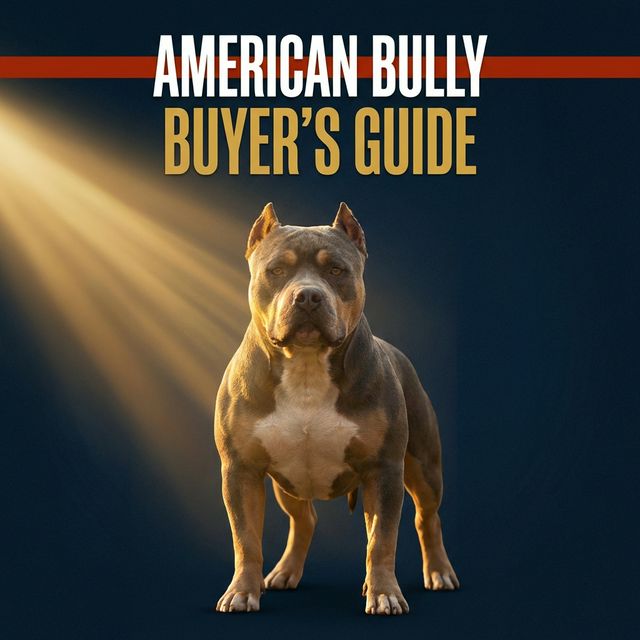
Why the Pocket American Bully Is the Most Popular Class in the US
The Pocket American Bully stands under 17 inches at the shoulder but packs the same muscular density as dogs twice its size. Walk through any American Bully show in the US, and you will notice Pocket entries outnumber every other class combined. The reason is simple: they give you the full bully look without the space requirements or the legal headaches that come with larger classes.
For first-time buyers, the Pocket class hits the sweet spot. You get a dog that fits comfortably in an apartment or a house with a small yard. They eat less than an XL or XXL. Vet bills tend to run lower because joint stress is reduced at this size. And they still turn heads on every walk.
What Makes a Pocket Bully Different From Other Classes?
Height is the defining factor. The ABKC (American Bully Kennel Club) sets the Pocket class at under 17 inches at the withers for males and under 16 inches for females. Everything else follows the same breed standard: heavy bone structure, wide chest, blocky head, and a compact muscular frame.
The term “Pocket” is misleading. These dogs weigh 25 to 50 pounds. You are not fitting one in your jacket pocket. The name refers to their height relative to the Standard class, nothing more.
Pocket Bully Price Breakdown: What You Should Actually Pay
In the US, a well-bred Pocket American Bully from a reputable breeder runs $1,500 to $4,000. That range depends on bloodline, color, and the breeder’s track record. Named bloodlines like Gottiline and Razor’s Edge command the upper end. Rare colors such as lilac tri and merle push prices past $5,000, though you should treat extreme color premiums with caution since some breeders prioritize color genetics over health testing.
In the UK, Pocket Bullies sit in a similar range at £1,500 to £4,000. They remain unaffected by the UK XL Bully ban, making them the fastest-growing class in Britain. Be aware that UK import costs can add £500-£1,000 if you are purchasing from a US breeder.
Is a Pocket Bully Right for Your Home?
If you live in an apartment, a condo, or a house without a large yard, the Pocket class works. They need 30 to 45 minutes of daily exercise. A brisk walk plus a 10-minute flirt pole session burns their energy without the high-intensity demands of a Standard or XL.
Families with young children often gravitate toward Pockets because of their manageable size. A 40-pound dog is far less likely to accidentally knock over a toddler than a 60-pound XL. Their temperament matches the rest of the breed: loyal, people-oriented, and extremely patient with kids.
Health Considerations Specific to Pocket Bullies
The compact build creates some specific risks. Brachycephalic Obstructive Airway Syndrome (BOAS) appears more frequently in Pockets than in Standards or Classics because breeders push for shorter muzzles. Listen to the puppy breathe before you commit. If you hear consistent snoring, wheezing, or labored breathing at rest, walk away.
Intervertebral Disc Disease (IVDD) also shows up in Pockets due to their shorter spine and heavy body. Ask breeders about spinal health in their lines. Good breeders will be upfront about it.
The Buyer’s Guide Covers Everything You Need
The complete American Bully Buyer’s Guide includes a dedicated Pocket Bully section covering size standards, fair pricing in both US and UK markets, a breeder vetting script with 8 questions to ask before handing over any money, and a printable 12-point puppy health checklist you can take to any viewing.
What You Get
Everything Inside the Pocket Bully Guide
- Pocket Bully Class Deep Dive — Size standards, temperament profile, exercise needs, and whether this class fits your home and lifestyle.
- Price Guide (US & UK) — Current price ranges for Pocket Bully puppies including color premiums, bloodline markups, and what to actually expect to pay.
- Breeder Vetting Script — 8 questions that separate legitimate Pocket Bully breeders from backyard operations. Red flags and green flags.
- 12-Point Puppy Health Checklist — Print this and run through it on any Pocket Bully puppy. Eyes, coat, breathing, movement, documents.
- First Week at Home — Shopping list, day one instructions, daily schedule, feeding, and toilet training fundamentals.
- Common Mistakes — The six most expensive mistakes first-time Pocket Bully owners make, with exactly how to avoid each one.
- Master Checklist — A single printable page covering every action before, during, and after buying your Pocket Bully.
Is This for You?
Who This Pocket Bully Guide Is Built For
This is for you if...
- You are looking specifically at Pocket Bully American Bullies
- You want to understand the size, cost, and care differences
- You want to avoid getting ripped off on price
- You want to know what to look for in a Pocket Bully breeder
- You are spending serious money and want to protect it
Skip it if...
- You have already bought your Bully
- You are an experienced breeder
- You are looking for a training programme
- You want a vet care or nutrition guide
Ready to Buy Your Pocket Bully the Right Way?
Get the complete Pocket Bully buyer's guide for $17.00. One-time payment. Instant download. 30-day guarantee.
Download the Guide – $17.00